Hot Flushes
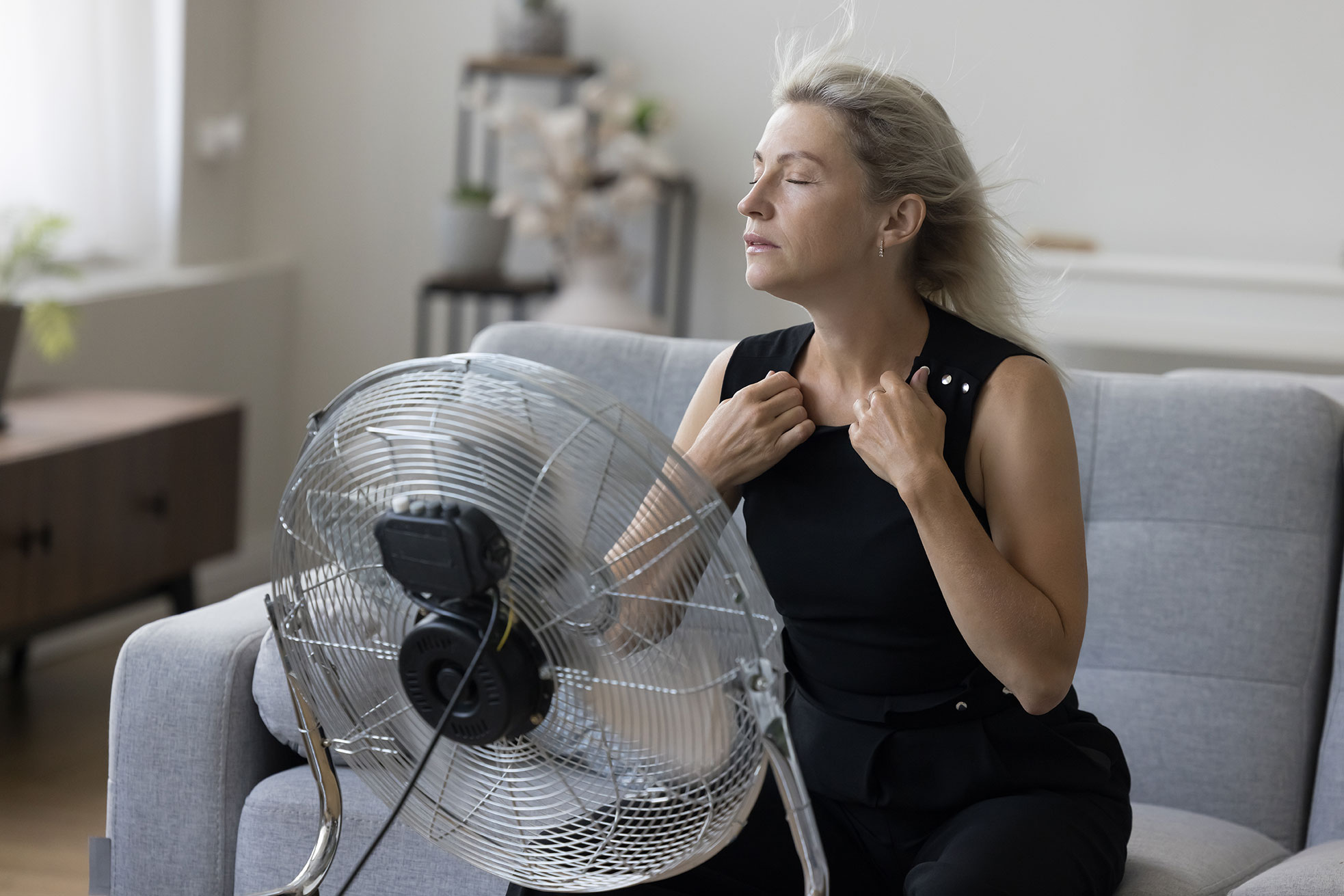
10 Apr 2026Hot flushes and night sweats are one of the most recognised symptoms women experience during the perimenopause and menopause.
Here are a few descriptions of Hot Flushes from women themselves:
“I suddenly feel a wave of heat come over me.”
“My face and chest get really hot out of nowhere.”
“I go bright red and start sweating.”
“It feels like heat rising from my chest into my face.”
“I feel flushed and uncomfortable for a few minutes.”
“I suddenly feel boiling hot, then it passes.”
“It comes on suddenly and makes me feel panicky.”
Night Sweats
A night sweat is a hot flush that happens whilst you are asleep.
Here are a few descriptions of a Night Sweats from women themselves:
“I wake up feeling clammy and cold after sweating heavily.”
“It only happens at night — during the day I’m fine.”
“I wake several times a night because I’m sweating.”
“The room isn’t hot, but I still sweat buckets overnight.”
“I wake up drenched in sweat and have to change my pyjamas.”
“The bed sheets are soaked during the night.”
Hot flushes and night sweats are also known as Vasomotor Symptoms (VMS).
What Is a Hot Flush?
Hot flushes usually start off with a sensation of heat and warmth, often accompanied by sweating, redness to the skin and palpitations.
It usually starts in the upper part of the body then may spread.
An average hot flush lasts 3 – 4 minutes.
However some women can experience hot flushes lasting from 30 seconds up to 1 hour.
Why Do Hot Flushes Occur?
Hot flushes are thought to occur from fluctuations in the brains temperature regulating mechanisms.
This is caused by the decline in oestrogen during the menopause transition.
Common Triggers for Hot Flushes
- Alcohol
- Caffeine
- Stress & Anxiety
- Spicy Foods
- Temperature Changes
- Embarassement
- Exercise
How long can I expect to experience hot flushes?
- Every woman is different and the duration of symptoms can vary
- The average overall duration: about 7 years
- Many people improve within 2–5 years
- Some continue for 10 years or longer
- A smaller group experience symptoms into their 60s or beyond
Treatment Options
Lifestyle
- Keep cool / Layered clothing
- Reduce alcohol & caffeine
- Stop smoking
- Exercise
- Regular Sleep
Lifestyle
- Stress management
- Well balanced diet
- Adequate Vitamin D supplementation
Hormone Replacement Therapy (HRT)
HRT is the most effective treatment for menopausal hot flushes and can greatly improve sleep and quality of life for many people.
Non Hormonal Replacement Therapy
If HRT is not right for you, non-hormonal medicines, can still help manage hot flushes.
This can include certain antidepressants, Gabapentin, Clonidine where suitable.
Psychological Therapies
Cognitive behavioural therapy can be offered to help manage hot flushes, improve sleep, and reduce the impact of symptoms.
Stress can worsen hot flushes so other helpful approaches may include:
- Relaxation exercises
- Mindfulness
- Yoga
Top Tips for Managing Hot Flushes
- Regular exercise
- Stop smoking
- Reduce caffiene & alcohol
- Regular sleep schedule
- Stress reduction
- Well balanced diet
- Medication (HRT /Non -HRT)
If you are struggling with hot flushes and would like some personalised support or further guidance, we are here to help you every step of the way—please do get in touch.